


Is Microneedling Worth It? What to Expect in Potomac, Maryland
Updated August 2026
Microneedling has been around long enough that it is no longer a trend, but a genuinely established treatment with real evidence behind it. Still, if you have never had it done, the idea of tiny needles creating controlled injuries in your skin on purpose can sound a little counterintuitive. Here is exactly how it works, what it actually treats, and what a realistic experience looks like if you are considering it in Potomac, Maryland.
How Microneedling Actually Works
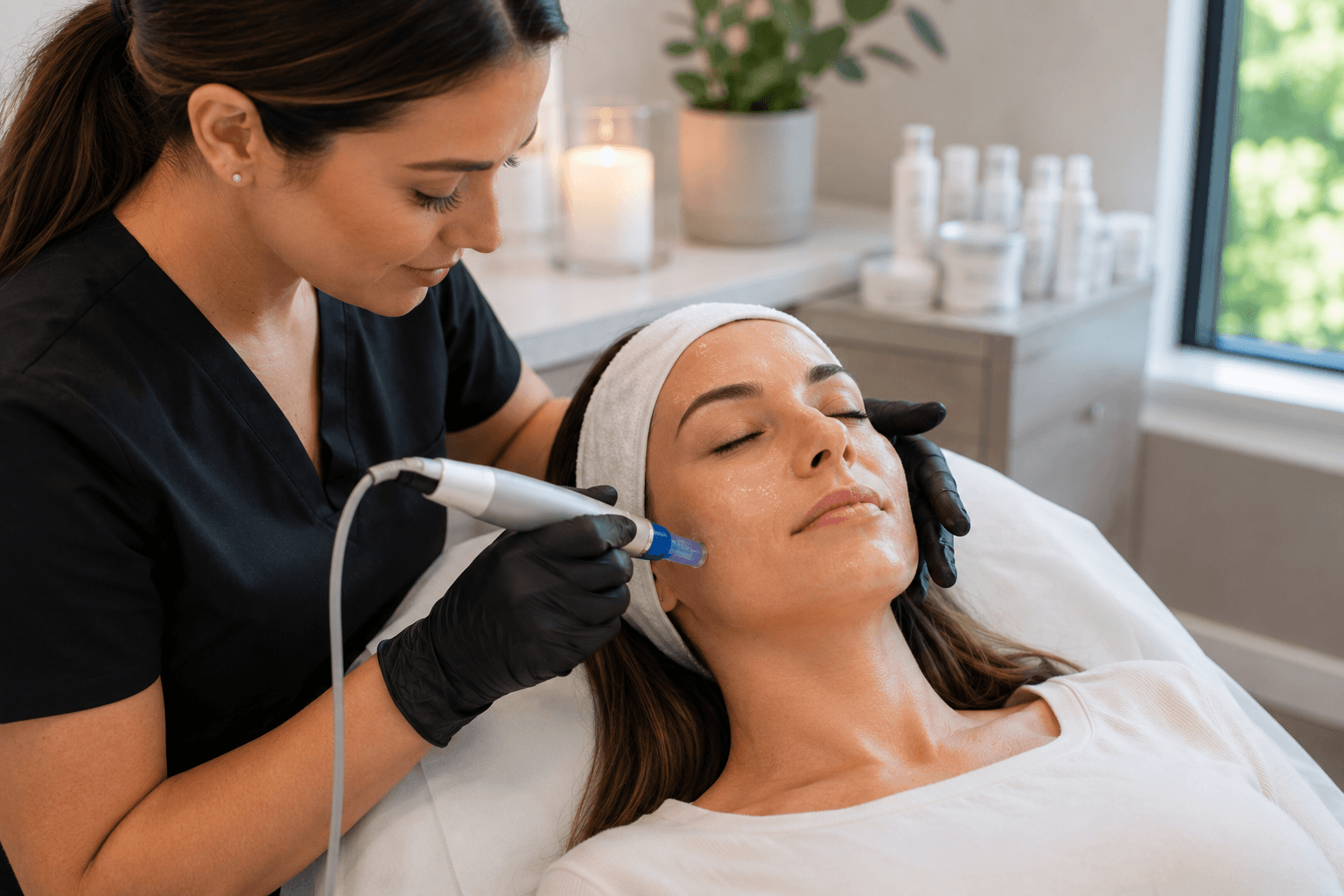
Microneedling uses a device with very fine needles to create thousands of microscopic punctures in the top layer of skin. This might sound aggressive, but the punctures are shallow and controlled. The point is not to damage the skin, it is to trigger your body's own healing response, specifically its production of collagen and elastin, the two proteins responsible for keeping skin firm, smooth, and resilient.
Collagen production naturally slows down as we age, which is a big part of why skin loses firmness and develops texture irregularities over time. Microneedling essentially convinces your skin to ramp collagen production back up, using your body's own repair process rather than an external product.
Traditional Microneedling vs RF Microneedling
There are a couple of variations worth understanding. Traditional microneedling relies solely on the mechanical needle punctures to stimulate collagen. Radiofrequency, or RF, microneedling adds heat energy delivered through the needles at the same time as the punctures, which can enhance the collagen stimulation and tightening effect, particularly for concerns involving skin laxity rather than just texture.
Which version makes sense for you depends on your specific concern, and this is exactly the kind of detail worth discussing at a consultation rather than assuming one is automatically better for everyone.
What Microneedling Actually Treats
Microneedling has a fairly wide range of applications, which is part of why it has remained popular rather than fading as a passing trend.
Acne scarring. This is one of the most well-documented uses. The controlled collagen response can noticeably soften the appearance of atrophic acne scars over a series of sessions.
Uneven texture and enlarged pores. By encouraging fresh collagen and improving overall skin remodeling, microneedling can visibly refine rough texture and the appearance of pore size. More detail is on our uneven skin texture concerns page.
Fine lines. Early collagen loss that shows up as fine lines, rather than deeper wrinkles, often responds well to a series of microneedling sessions. See our fine lines concerns page for more.
Overall skin quality decline. For patients noticing a general loss of radiance, firmness, or evenness that is hard to pin to one specific issue, microneedling is often recommended as a broad, collagen-focused reset. Our overall skin quality decline page covers this in more depth.
Why Microneedling Is Often Paired With PRP or PRF
One of the most effective combinations in the skin health category right now is microneedling paired with PRP or PRF, sometimes called a vampire facial. This involves drawing a small amount of your own blood, processing it to concentrate the growth factors and platelets, and applying it to the skin during the microneedling session. The microneedling creates the access points, and the PRP or PRF enhances the healing and collagen response that follows. For patients focused on maximizing results from each session, this combination is worth discussing with your provider. Learn more on our PRP/PRF page.
What a Microneedling Session Actually Feels Like
A topical numbing cream is typically applied before treatment, so most patients describe the sensation as a mild vibrating or scratching feeling rather than significant pain. A single session generally takes between thirty minutes and an hour depending on the area treated and whether PRP or PRF is added.
What Recovery Looks Like
Immediately after treatment, your skin will likely look flushed, similar to a mild sunburn, and may feel slightly tight or sensitive for a day or two. Some patients experience light flaking as the skin renews itself over the following days. Most people are comfortable returning to normal activities within a day, though makeup is usually not recommended for at least twenty four hours to reduce the risk of irritation or infection at the micro-injury sites.
How Many Sessions You Will Realistically Need
Microneedling is not typically a one-and-done treatment. Because it works by triggering your body's own gradual collagen response, most providers recommend a series of sessions, often spaced four to six weeks apart, to see the full benefit. The exact number depends on what you are treating. Acne scarring, for example, often requires more sessions than a general texture refresh. A good consultation should give you a realistic session count and timeline rather than a vague estimate.
Is Microneedling Worth It
For the right concern, the answer is generally yes. Compared to more aggressive resurfacing treatments, microneedling offers meaningfully less downtime while still producing real, measurable improvements in texture, tone, and firmness over time. It is not an instant fix, and anyone expecting dramatic results after a single session is likely to be disappointed. But as part of a realistic, multi-session plan, it remains one of the more evidence-backed skin health treatments available.
Who Should Consider Something Else First
If your primary concern is deep, static wrinkles or significant volume loss, microneedling alone is unlikely to be the most effective starting point. In those cases, a combination approach involving fillers or neurotoxins alongside microneedling, or a different treatment entirely, may get you to your goal faster. This is exactly the kind of nuance a real consultation should walk you through, rather than a one-size-fits-all recommendation applied to every patient who asks about it.
Bringing Your Skin's Collagen Back to the Conversation
Microneedling works because it uses your own skin's healing ability rather than fighting against it. Given a realistic timeline and the right combination of sessions, it remains one of the more reliable ways to improve texture, tone, and overall skin quality without significant downtime.
If you are in Potomac, Maryland and want to know whether microneedling fits your specific skin goals, schedule a consultation or learn more on our microneedling service page.
Frequently Asked Questions
How many microneedling sessions will I need to see results? Most patients need a series of sessions, often spaced four to six weeks apart, with the exact number depending on the specific concern being treated.
Is microneedling painful? A topical numbing cream is typically applied beforehand, so most patients describe the sensation as mild vibrating or scratching rather than significant pain.
What is the difference between microneedling and RF microneedling? Traditional microneedling relies on needle punctures alone, while RF microneedling adds radiofrequency energy to enhance collagen stimulation, which can be especially useful for skin laxity.
Can microneedling help with acne scars? Yes, microneedling is one of the more well-documented treatments for softening the appearance of atrophic acne scars over a series of sessions.
Should I add PRP or PRF to my microneedling session? Adding PRP or PRF can enhance the healing and collagen response after microneedling, and many patients choose this combination for more noticeable results.