

What Is the Best Facial for Your Skin? A Potomac, Maryland Guide
Updated August 2026
"Best facial" is one of those searches where the honest answer is: it depends on your skin. A facial that works wonders for someone dealing with dullness might do very little for someone whose main concern is sun damage or acne scarring. The best facial for you is the one matched to what your skin actually needs, not the one with the fanciest name on the treatment menu.
Here is how to think through your options if you are in Potomac, Maryland and trying to figure out where to start.
Why "Best Facial" Is the Wrong Question to Start With
Before comparing treatments, it helps to get specific about what is actually bothering you. Is it texture? Tone? A general dullness that makeup does not quite fix? Fine lines? Once you know your primary concern, choosing between treatment options gets a lot easier, because most medical-grade facials are built to solve fairly specific problems.
If Your Concern Is Dullness and Dehydration
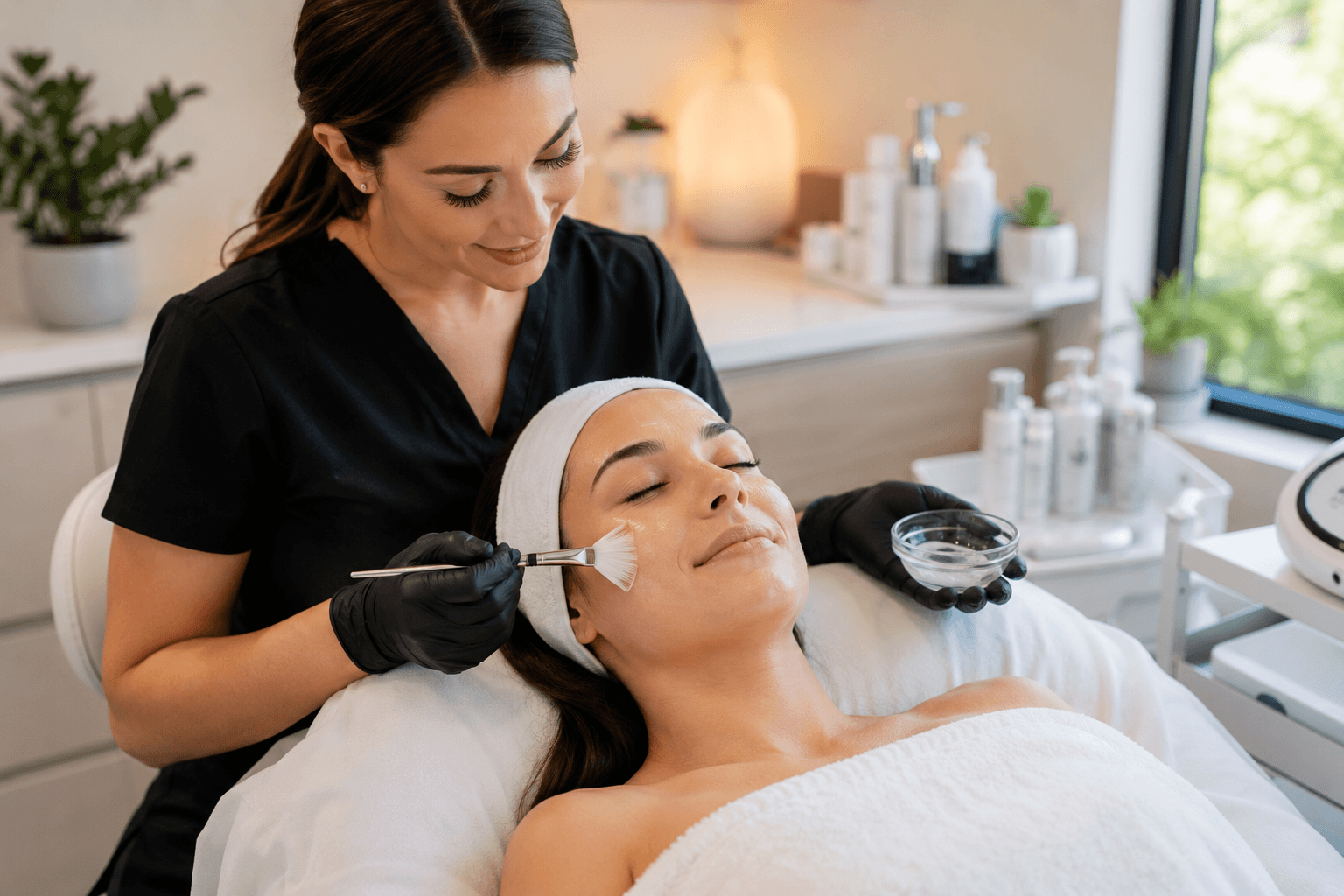
Skin that looks flat or tired, even when you are not, often points to a barrier or hydration issue rather than something that needs an aggressive treatment. A chemical peel can be a great entry point here. Peels work by encouraging gentle exfoliation, which helps remove the buildup of dead skin cells that make complexion look dull, revealing fresher skin underneath. Depending on the strength, a peel can be done with little to no downtime, making it an easy fit for someone who wants visible results without disappearing for a week. You can read more about how peels work on our chemical peels page, and see if this matches what you are dealing with on our dullness and dehydration concerns page.
If Your Concern Is Texture, Large Pores, or Acne Scarring
Microneedling is generally the better call here. The treatment uses fine needles to create controlled micro-injuries in the skin, which triggers your body's natural collagen production. Over a series of sessions, this can noticeably improve texture, refine the look of pores, and soften the appearance of acne scarring. It is often combined with PRP or PRF, using your own blood plasma to enhance the healing and collagen response. Learn more on our microneedling page or our PRP/PRF page, and check whether this fits what you are noticing on our uneven skin texture concerns page.
If Your Concern Is Sun Damage or Pigmentation
Sun spots, uneven tone, and visible sun damage respond well to targeted laser treatment. LaseMD is a non-ablative laser treatment designed to address pigmentation and improve overall skin tone with minimal downtime compared to more aggressive laser resurfacing. It is a strong option for anyone dealing with the cumulative effects of sun exposure over the years. See our LaseMD page and our sun damage concerns page for more detail on whether this is the right direction for you.
If Your Concern Is Fine Lines or Early Collagen Loss
This is where facials sometimes need to be paired with something beyond a single session. Microneedling helps stimulate the collagen your skin naturally loses over time, and for some patients, adding neurotoxins to address expression-driven lines rounds out the plan. There is no single facial that reverses years of collagen loss in one visit, and any provider who promises that outcome is overselling. A realistic plan usually involves a series of treatments, with maintenance sessions afterward.
What Actually Makes a Facial "Medical Grade"
The term gets used loosely, so here is what should genuinely separate a medical-grade facial from a basic spa facial. Medical-grade treatments are typically performed or overseen by trained clinical staff, use higher-strength active ingredients or actual medical devices rather than surface-level products, and are based on an assessment of your specific skin, not a one-size-fits-all protocol applied to every client that walks in.
That last part matters most. If a facial recommendation happens before anyone actually looks closely at your skin, that is worth questioning.
How Often You Should Get a Facial
This depends heavily on which treatment you choose. A chemical peel might be recommended every four to six weeks depending on strength. Microneedling is typically spaced out over several weeks between sessions to allow your skin to fully heal and regenerate collagen. LaseMD treatments are often done in a series with rest periods in between. A good consultation should give you a realistic timeline, not just a one-time appointment with no plan for what comes next.
What to Expect at Your First Visit
Your first appointment should start with an actual conversation and skin assessment, not a treatment on the spot. A good provider will ask about your skin history, any recent sun exposure, medications, and what specifically bothers you before recommending anything. From there, you should leave with a clear plan, including how many sessions are realistic and what results to expect and when.
The Skin-Deep Truth About Choosing the Right Facial
There is no universal winner in the world of facials. The right one for you depends entirely on what your skin is actually dealing with, which is exactly why a real consultation matters more than a trending treatment name. Start with your specific concern, match it to the right approach, and be honest with your provider about your goals and your tolerance for downtime.
If you are in Potomac, Maryland and not sure where to start, book a consultation and we will walk through your skin and your goals together, then match you with the right treatment rather than the trendiest one.
Frequently Asked Questions
What is the best facial for dull, tired-looking skin? A chemical peel is often a strong first option for dullness, since it removes the buildup of dead skin cells that flatten your complexion.
Can I combine different facial treatments? Yes. Many patients combine microneedling with PRP or PRF, or pair a series of peels with occasional laser treatments, depending on their goals.
How long do facial results typically last? This varies by treatment. A single peel offers temporary brightening, while microneedling and laser treatments build cumulative, longer-lasting results over a series of sessions.
Is there downtime with medical-grade facials? It depends on the treatment and its intensity. Light chemical peels often have little to no downtime, while microneedling and certain laser treatments may involve a few days of redness or peeling.
How do I know which facial is right for my skin? The best way to know is through an in-person consultation, where a provider can assess your specific skin concerns and recommend the treatment most likely to address them.