
Muscle Tension / Muscle-Driven Aging
When Muscle Activity Shapes Aging
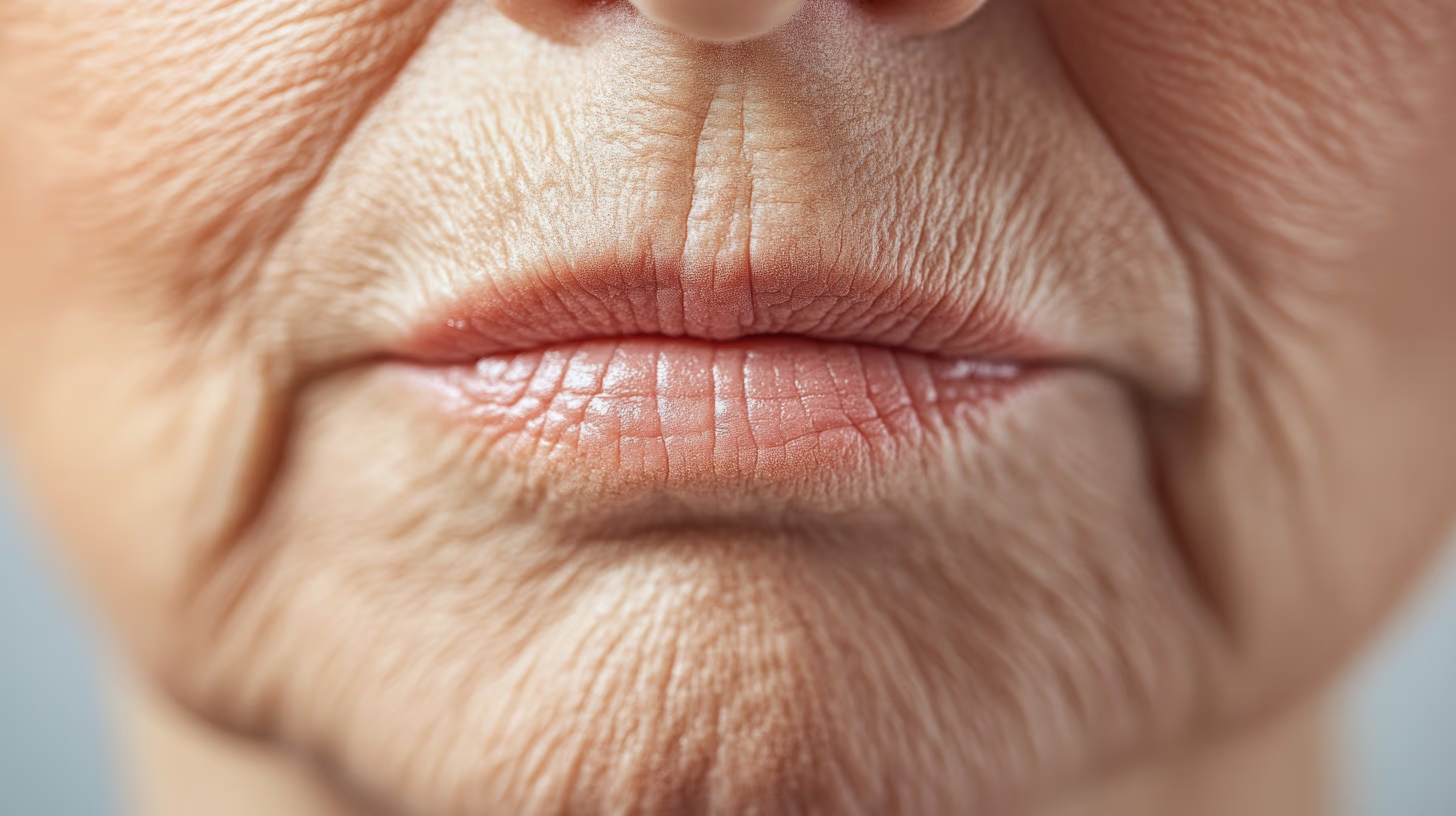
Repeated muscle contraction can lead to tension, visible lines, and changes in facial appearance. Over time, this activity influences how wrinkles form and how facial features rest.
Care focuses on reducing excessive muscle activity while maintaining normal function, comfort, and natural expression.
How We Treat Your Concerns
Muscle-driven aging is addressed through treatments that reduce excessive contraction and relieve tension. Care focuses on targeted relaxation to soften lines, improve comfort, and support balanced facial movement without limiting normal function over time or natural expression stability.

Neurotoxins
Neurotoxins are injectable treatments that temporarily relax targeted muscles to reduce expression lines and muscle-driven concerns.
Every recommendation is based on anatomy, skin behavior, and realistic timelines. Treatments are introduced gradually, allowing results to settle, responses to be assessed, and decisions to remain grounded over time.

A Clinically-Guided Glow
Treatment planning is deliberate and paced, allowing time to assess response and adjust thoughtfully. Recommendations evolve as skin changes, prioritizing balance and proportion, so results remain appropriate, credible, and consistent with how faces age over time without pressure, excess, or unnecessary repetition, long-term focus.
Any Questions?
Muscle tension–driven aging occurs when repeated or excessive muscle contraction contributes to visible lines, tension patterns, and changes in facial appearance over time.
Ongoing muscle tension can deepen expression lines, alter resting facial appearance, and contribute to a tired or tense look even when the face is relaxed.
Yes. Stress can increase muscle tension and repetitive facial movements, which may accelerate the development of muscle-driven aging patterns.
Muscle-driven aging can be associated with facial tension or discomfort in some individuals, particularly when overactivity is persistent.
Yes. Muscle-driven aging is a natural process influenced by facial movement patterns, stress, and individual muscle use over time.
Muscle-driven aging commonly appears in the forehead, between the brows, and around the eyes where facial muscles are most active.
Excess muscle activity can alter resting expression, sometimes creating a tense or fatigued appearance even without intentional expression.
Yes. Muscle-driven aging relates to movement and contraction, while volume loss involves changes in underlying fat and structural support.