

What Does Botox Actually Do in Potomac, Maryland?
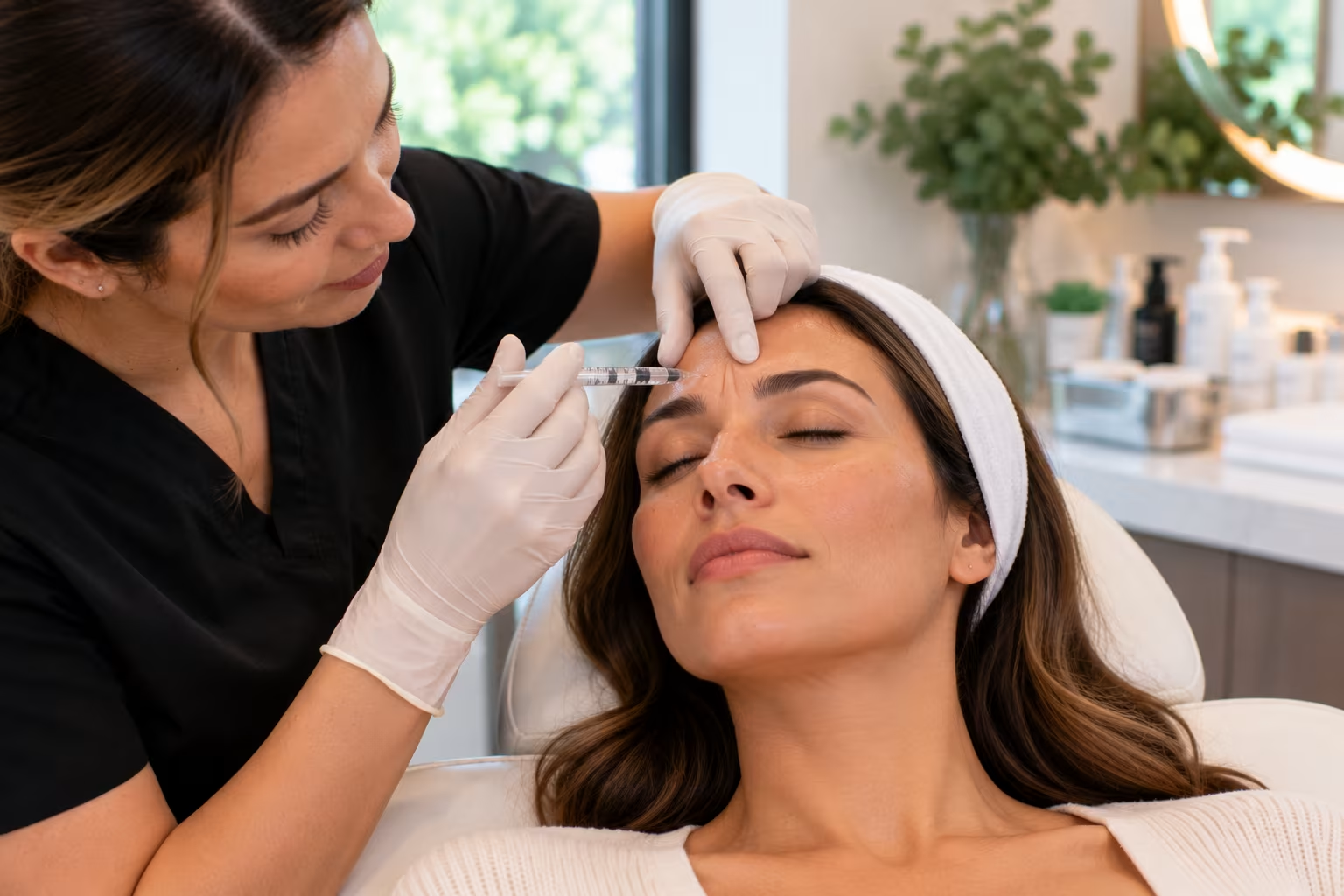
Botox softens the expression lines that form from repeated facial movement, most often across the forehead, between the brows, and around the eyes. It works by temporarily limiting the muscle activity that creates those lines, so the skin above them stays smoother between appointments. For Potomac residents balancing demanding careers, that translates into a treatment that fits into a lunch break and leaves nothing to explain to a client an hour later.
Between River Road and the corridor of consulting firms, law offices, and federal agencies that Potomac professionals commute to and from, the phrase "I don't have time for this" comes up constantly in aesthetic consultations. Botox has stayed relevant for decades precisely because it does not ask for much. There is no incision, no real recovery period, and no visible sign that anything happened at all, aside from a smoother forehead a few days later.
Who Actually Needs Botox, and Why Does It Matter for Busy Professionals?
Botox tends to make the most sense for people who notice lines appearing even when their face is at rest, not just when they smile or frown. That pattern is common among professionals who spend long hours frowning at spreadsheets, squinting into video calls, or holding a look of concentration for most of the day.
Muscle tension from stress and screen time plays a bigger role in early expression lines than most people realize. Someone in their thirties or forties who spends ten hours a day in back to back meetings may develop the same forehead creasing as someone a decade older who spends more time relaxed. Botox addresses the muscle behavior driving that pattern, not just the line itself, which is part of why it remains one of the most requested treatments for people trying to look as rested as they feel they should, even on weeks that do not allow for much actual rest.
How Long Does a Botox Appointment Really Take?
A typical appointment runs about fifteen to twenty minutes once the assessment is complete, and there is no downtime that would interfere with a normal workday. Most patients return directly to their office, a client meeting, or a school pickup line immediately afterward.
The process starts with a short conversation about which areas feel tense or expressive, followed by a review of anatomy and dosing before any injections take place. This is a deliberate step, not a formality. A structured assessment before treatment is part of what keeps results looking proportionate rather than frozen, and it is the same approach used for every injectable service, including dermal fillers and bioregenerative fillers.
What Does Botox Feel Like, and Is There Any Downtime?
Most people describe the injections as a series of quick pinches rather than significant pain, and a fine needle keeps discomfort minimal. Mild redness at the injection sites usually fades within an hour.
There is no bandage, no bruising expected in most cases, and no restriction on returning to work. The only real guidance afterward is to avoid lying down flat or vigorously rubbing the treated area for a few hours, which is easy to work around during a normal Tuesday. Results are not immediate. Full effect develops gradually over three to seven days as the targeted muscles relax, which is why appointments are best scheduled a week or so before an event rather than the morning of.
How Long Do Results Actually Last?
Results generally last three to four months before the treated muscles gradually regain their usual activity and expression lines start to reappear. Maintenance appointments a few times a year keep results consistent without requiring constant upkeep.
This is one of the more practical parts of Botox for people with unpredictable schedules. There is no daily routine to maintain and no product to remember to apply. A quarterly appointment, planned around an already busy calendar, does most of the work.
Botox or Dysport, and Does the Difference Actually Matter?
Both are neurotoxin treatments that work in a similar way, relaxing targeted facial muscles to soften expression lines, though they differ slightly in onset speed and how they diffuse through tissue. The right choice usually comes down to individual anatomy and treatment goals rather than one product being universally better.
This is exactly the kind of decision that benefits from a provider who evaluates the face first and picks a treatment approach second, rather than defaulting to whichever product is being pushed that month. A conservative, assessment based approach tends to hold up better over repeated treatments, since dosing can be adjusted gradually instead of guessed at.
Can Botox Be Combined With Other Treatments?
Yes, and for many patients it works best as part of a broader plan rather than a standalone fix. Someone dealing with expression lines and volume loss at the same time, for example, might pair Botox with bioregenerative fillers to address structural changes that muscle relaxation alone cannot touch.
Skin quality also plays a role in how smooth results ultimately look. Treatments like microneedling or a chemical peel can improve texture and tone around treated areas, which is part of why a proper consultation looks at the whole face rather than a single line.
Is Botox Right for You if You Live or Work Near Potomac?
If you are noticing forehead lines, brow tension, or crow's feet that show up even when your face is relaxed, and you want a low commitment way to address them, Botox is worth a conversation. It is not the right fit for someone looking to address sagging, hollowing, or lost volume, since those concerns respond better to filler based treatments that restore structure rather than relax muscles.
The Glow Effect is based just over the Bethesda line on Wisconsin Avenue, a short drive from Potomac neighborhoods along River Road and Falls Road, and works with patients from both communities who want treatment planned around anatomy and long term skin health rather than a one size fits all approach. You can review the full injectables lineup or the specific neurotoxin service page to see how appointments are structured before booking a consultation.
Frequently Asked Questions
Does Botox hurt? Most patients describe it as a brief pinching sensation rather than real pain, and no numbing is typically needed.
How soon will I see results? Full results usually appear within three to seven days, though some softening may be noticeable earlier.
Will people be able to tell I had Botox done? When dosed conservatively, the goal is a rested, natural appearance rather than a visibly altered one. Most patients report that coworkers notice they look less tired, not that anything specific changed.
Can I get Botox before an important work event? Yes, but plan ahead. Since full results take about a week to develop, schedule your appointment at least seven to ten days before the event.
Is Botox safe for regular, ongoing use? Botox has a long safety record when administered by a qualified provider with appropriate spacing between treatments, typically every three to four months.
Do I need to stop working after treatment? No. Most patients return to work, driving, and normal activity immediately after their appointment.
This guide was updated in September 2026 to reflect current treatment approaches and scheduling considerations for Potomac area patients.
So, Is Botox Worth the Fifteen Minutes?
For most professionals juggling a packed calendar, the honest answer is that fifteen well spent minutes rarely make a dent in the day, and the payoff is a forehead that stops broadcasting how stressful the quarter has been. Book a consultation to find out whether Botox, a different injectable, or a combination approach fits your skin and your schedule best.