


Facial Fillers in Potomac, Maryland: What They Actually Do and Who They Are For
Updated August 2026
Volume loss is one of those changes that tends to sneak up gradually rather than all at once. Cheeks that used to look full start to look a little hollow. Lips lose some of their definition. The area under the eyes starts to show a shadow that was not there a few years ago. None of this happens overnight, which is part of why facial fillers have become one of the most requested treatments for people who want to restore what time has quietly taken away, without changing who they look like.
This guide breaks down how facial fillers actually work, what your options are, and how to think about whether they are right for you if you are in Potomac, Maryland.
What Facial Fillers Actually Do
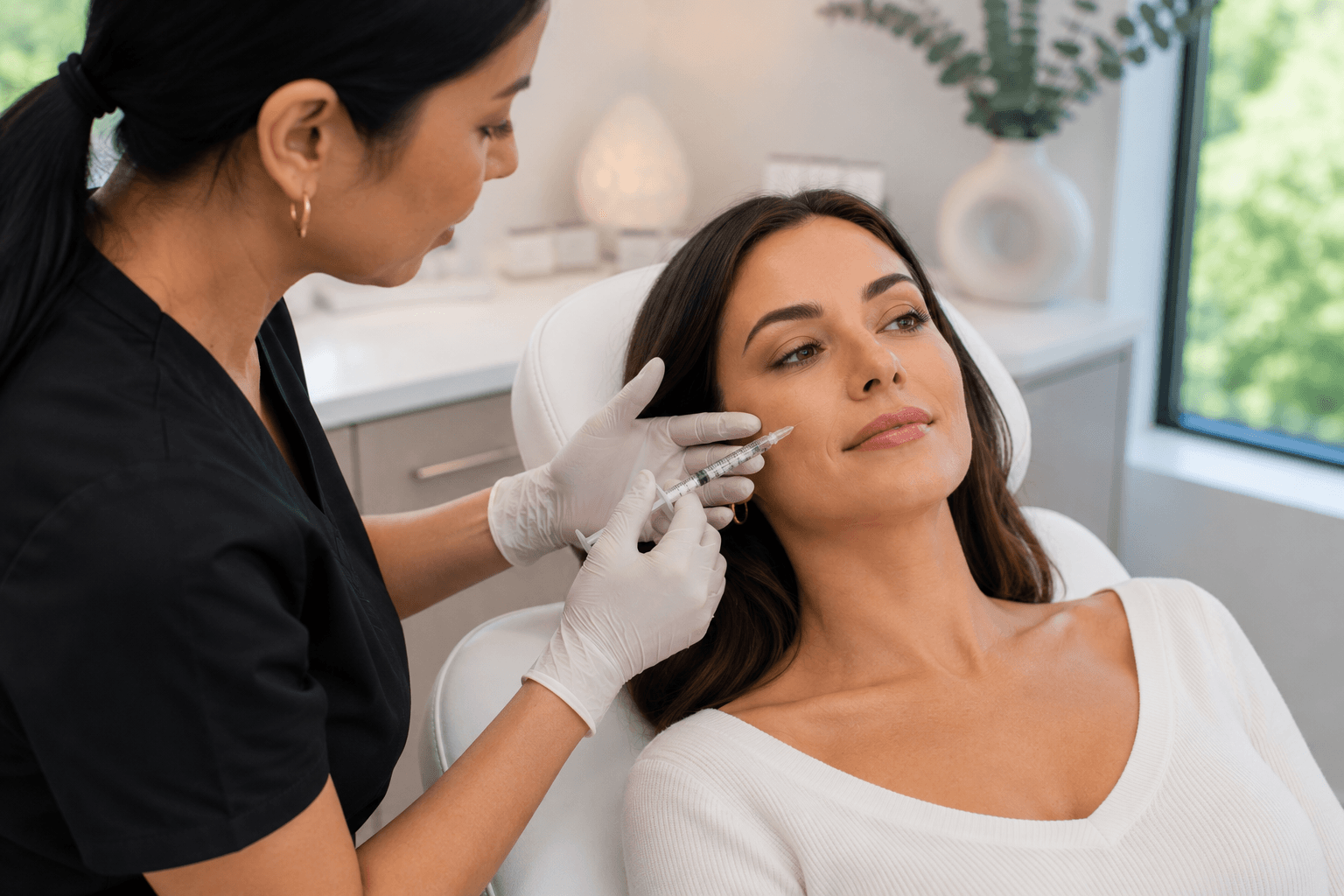
Fillers are injectable treatments designed to restore lost volume and support the skin's underlying structure. As we age, we naturally lose fat pads, collagen, and bone density in the face, which is what causes hollowing, sagging, and a general loss of that youthful fullness in the cheeks and midface. Fillers work by replacing that lost volume directly, which can lift and support the skin from underneath rather than just treating the surface.
This is different from neurotoxins like Dysport, which relax muscle movement to soften expression lines. Fillers and neurotoxins solve different problems, and many patients eventually use both as part of a complete plan, which you can read more about on our neurotoxins page.
Traditional Fillers vs Bioregenerative Fillers
Most people are familiar with hyaluronic acid fillers, which add volume immediately and are often chosen for their adjustability and reversibility. But there is another category worth knowing about: bioregenerative fillers.
Rather than simply adding volume on contact, bioregenerative fillers work by stimulating your own body's collagen production over time, building structure gradually rather than all at once. This can result in a more natural progression of results and, for some patients, longer-lasting improvement in overall skin quality rather than volume alone. You can learn more about this approach on our bioregenerative fillers page.
Neither type is universally better. The right choice depends on your specific concern, how quickly you want to see results, and your longer-term goals for your skin.
Where Facial Fillers Are Commonly Used
Fillers can be used across a wide range of areas, and where you need them depends entirely on your own face and what has changed over time.
Cheeks. Restoring volume here can lift the midface and soften the appearance of nasolabial folds.
Lips. Fillers can restore lost definition and fullness, or simply enhance natural lip shape for those who have not lost volume yet.
Jawline and chin. Filler here can improve definition and balance facial proportions. Read more on our jawline and chin treatment area page.
Under-eye area. Hollowing here often creates a tired or shadowed look that concealer cannot fully hide. See our under-eye area page for more detail.
Neck and décolleté. Less commonly discussed but increasingly requested, filler can address volume loss and skin quality in these areas as well. Details are on our neck and chest and décolleté pages.
How to Know If You Are a Good Candidate
If your primary concern is hollowing, a loss of fullness, or a general "tired" look that seems to come from lost structure rather than lines, fillers are usually the more direct answer. If you check our volume loss concerns page or facial contour changes page and recognize your own concerns there, that is generally a good sign filler is worth discussing at a consultation.
Fillers are not the right answer for everyone, though. If your main concern is dynamic wrinkles caused by muscle movement, like forehead lines or crow's feet, a neurotoxin is typically the better first step. A good consultation should clarify this rather than defaulting straight to filler because it is the more commonly requested treatment.
What to Expect During Treatment
Filler appointments typically take between thirty minutes and an hour, depending on how many areas are being treated. Most fillers include a numbing agent to minimize discomfort during injection. Afterward, some swelling and mild bruising are common, particularly in more delicate areas like the lips or under-eyes, and these effects generally resolve within a week to ten days.
Results are visible immediately, though final results, once any initial swelling settles, are usually best judged after about two weeks.
How Long Facial Fillers Last
Duration varies by product and treatment area. Areas with more movement, like the lips, tend to metabolize filler faster than areas with less movement, like the cheeks. Bioregenerative fillers, since they work by stimulating your own collagen, tend to have a different and often longer trajectory than traditional hyaluronic acid fillers. Your provider should give you a realistic timeline specific to the product and area used during your consultation.
Filler Safety and Reversibility
One advantage of traditional hyaluronic acid fillers is that they can be dissolved if needed, which offers a level of flexibility that some other treatments do not. This is part of why choosing an experienced injector matters so much. A provider who understands facial anatomy in detail can place filler in a way that minimizes risk and can adjust or correct results if your goals change.
The Long and Short of Restoring What Time Has Taken
Facial fillers are not about changing your face into someone else's. Done thoughtfully, they restore what volume loss has quietly taken away, cheeks that have hollowed, lips that have thinned, a jawline that has softened, so that your reflection matches how you actually feel.
If you are in Potomac, Maryland and want to talk through which type of filler and which areas make sense for your face, schedule a consultation or explore our full dermal fillers page to learn more before your visit.
Frequently Asked Questions
What is the difference between fillers and neurotoxins like Dysport? Fillers restore lost volume and structure, while neurotoxins relax muscle movement to soften expression lines. Many patients eventually use both together.
Are bioregenerative fillers better than traditional fillers? Neither is universally better. Bioregenerative fillers work gradually by stimulating your own collagen, while traditional fillers add volume immediately. The right choice depends on your goals and timeline.
How long do facial fillers last? Duration depends on the product used and the treatment area, with areas that move more, like the lips, generally needing touch-ups sooner than areas like the cheeks.
Is filler treatment painful? Most fillers include a numbing agent, and discomfort is generally described as mild pressure rather than significant pain.
Can facial fillers be reversed if I do not like the results? Traditional hyaluronic acid fillers can typically be dissolved if needed, which is one reason many patients choose this option, particularly for their first treatment.